May 5, 2026 · By SP Fabrication
Japandi Design: How Japanese and Scandinavian Aesthetics Meet in Custom Furniture
Japandi is not a trend — it is the convergence of two philosophies that have always shared the same core values. Here is how we interpret it in solid wood and custom upholstery.
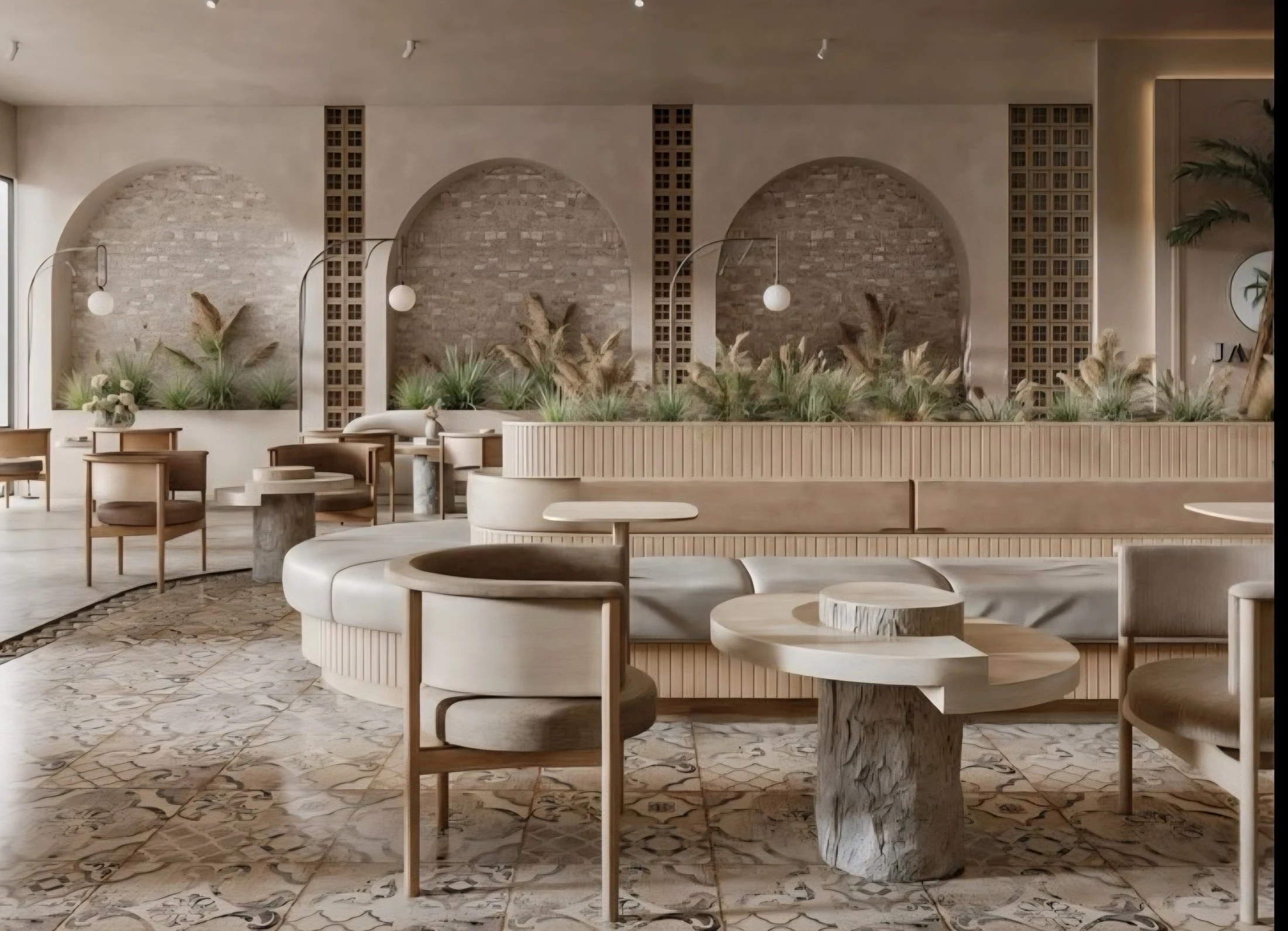
The word Japandi — a portmanteau of Japanese and Scandinavian — has been circulating in interior design media since around 2019. Like all design labels, it risks being reduced to a surface aesthetic: white oak, natural linen, a few neutral ceramics, a potted olive tree. Apply the palette and call it done.
That is not what Japandi is. And it is not how we think about it when a client commissions a piece in this register.
The Philosophical Overlap
Japanese aesthetics, at their core, are about the elimination of the unnecessary. Every element that does not serve a purpose — or that does not add beauty in its purposefulness — is removed. The tea house is the archetype: nothing in it is decorative; everything in it is the right thing in the right place.
Scandinavian design philosophy is functionally similar. The Scandinavian tradition of demokratisk design — the idea that well-made, beautiful objects should be accessible and used, not displayed — produces furniture that earns its place through usefulness rather than status signalling. Danish joinery, in particular, treats the joint itself as a design element: the way a leg meets a rail or a drawer slides from a cabinet is part of the beauty of the piece.
Where these two traditions meet: in the conviction that craft, material honesty, and restraint produce more beautiful results than decoration, novelty, or excess.
What Japandi Looks Like in Practice
In furniture terms, Japandi means:
Species choice: White oak is the dominant species — its open grain, pale warmth, and neutrality work equally well in Japanese and Scandinavian contexts. Ash and beech are also strong choices. Dark-stained finishes (ebonised, shou sugi ban) are used for contrast elements, never as the primary surface.
Form: Low profiles, clean lines, and deliberate proportions. A Japandi dining table is not precious — it has a strong, honest presence that does not require ornamentation to hold its own. Legs are tapered, angled, or architecturally proportioned. They are never afterthoughts.
Joinery: Visible and intentional. Where a Japandi piece uses a dovetail joint or a wedged tenon, that joint is celebrated — not hidden behind a veneer or a corner cap. The craftsmanship is the decoration.
Finish: Matte or satin, never gloss. Oil and hardwax oil finishes are ideal — they enhance the grain without creating a reflective surface. The wood reads as wood, not as a lacquered approximation of wood.
Upholstery: Natural linen, bouclé, and undyed wool in neutral tones. Low arms, clean seat decks, and minimal cushion volume. The upholstered element should not compete with the wood — it should complement it.
Our Approach
When we take a Japandi brief, the first conversation is always about subtraction. What can we remove? Where is the simplest version of this form? What happens if the arm is lower, the leg is thinner, the seat is shallower?
The answer is usually that the simplest version is the best version. This is the counterintuitive truth of restrained design: it takes more craft, not less, to make a chair that earns its place with nothing but proportion and material. There is nowhere to hide.
It is, for exactly that reason, where we do our best work.